
Reports

Reports: Trauma-Informed Design in the Classroom
This report discusses the concept of the "third teacher" - the physical environment - and the way it impacts student experiences. The publication provides simple fixes for classroom pain points and opportunities for teachers to adapt their learning environments to better fit the needs of youth.
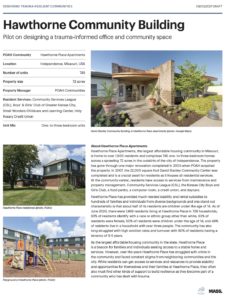
Reports: Hawthorne Community Building: Pilot on Designing a Trauma-Informed Office and Community...
This case study is one component of Preservation of Affordable Housing's Trauma Informed Housing Toolkit. The case study looks at trauma-responsive design renovations made to the largest affordable housing community in Missouri and outlines the process POAH underwent to make these adjustments, including extensive stakeholder engagement.
Reports: Creating Restorative Communities: Biophilic Design and Low-Income Housing
This report discusses the benefit of biophilic design, a predecessor and crucial component of the emerging field of trauma-informed design. The report provides a closer look at the incorporation of biophilic design principles in low-income housing.
Reports: Implementing a Four-Phased Trauma Informed Design Process
This framework outlines the core values driving trauma-responsive design work and provides an overview of trauma-responsive design implememtation, including the four critical steps that ensure that TID is incorporated in each project from the onset.
Reports: Designing for Healing, Dignity, and Joy: Promoting Physical Health, Mental Health, and...
This publication provides an overview of the ways in which trauma-responsive principles can be incorporated into the design of communal social service spaces to prevent retraumatization and pr omte physical and mental health and well-being.
Reports: Missouri – Policy Guidance for Trauma Informed Human Resources Practices
This policy guide is intended to help organizations develop Human Resource policies and practices that are trauma-informed and support a trauma-informed approach.
Reports: Oregon – A Trauma-Informed Workforce: An Introduction to Workforce Wellness
This document provides foundational information about workforce wellness for organizations in early stages of adopting workforce wellness programs to address secondary traumatic stress.
Reports: Resource Guide to Trauma-Informed Human Services
This guide provides an introduction to the topic of trauma, a discussion of why understanding and addressing trauma is important for human service programs, and relevant resources for implementing trauma-informed policies and practices for leaders at the local, state, tribal, and territorial levels. Topics include ACEs, Post Traumatic Stress Disorder, and historical trauma; providing trauma-informed services; building staff capacity and resilience; and addressing compassion fatigue, toxic stress, and executive functioning of staff.
Reports: Michigan – Workplace Mental Health
This report details findings of a Michigan Department of Labor and Economic Opportunity workgroup focused on mental health, trauma, and resiliency in the workplace. The report provides key strategies and opportunities for employers to help build supportive workplaces by integrating employee mental health strategies that establish healthier workplaces, enhance employee wellbeing, and promote resilient companies.
Reports: Valuing and Retaining Staff: Understanding and Being Responsive to Trauma Can Benefit...
This issue brief provides information about the impact of vicarious and secondary trauma on professionals in organizations serving the health and well-being of others. The brief also provides practices organizations can take to become trauma-responsive, combat compassion fatigue and secondary trauma, and support a healthy, resilient workforce.
